

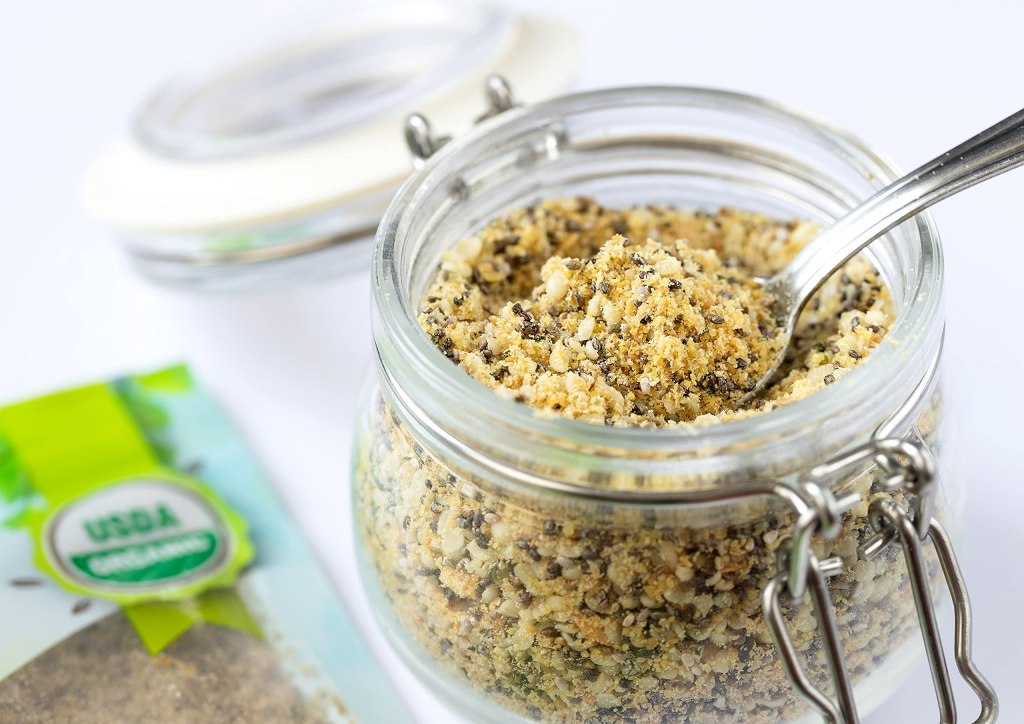
Stacked – The Hidden Hormone Load and Your Skin
I work with skin every day.
And I can see the pattern.
Stubborn jawline breakouts.
Inflamed, cyclical flare-ups.
Skin that won’t settle.
And when we trace it back to basics, there it is.
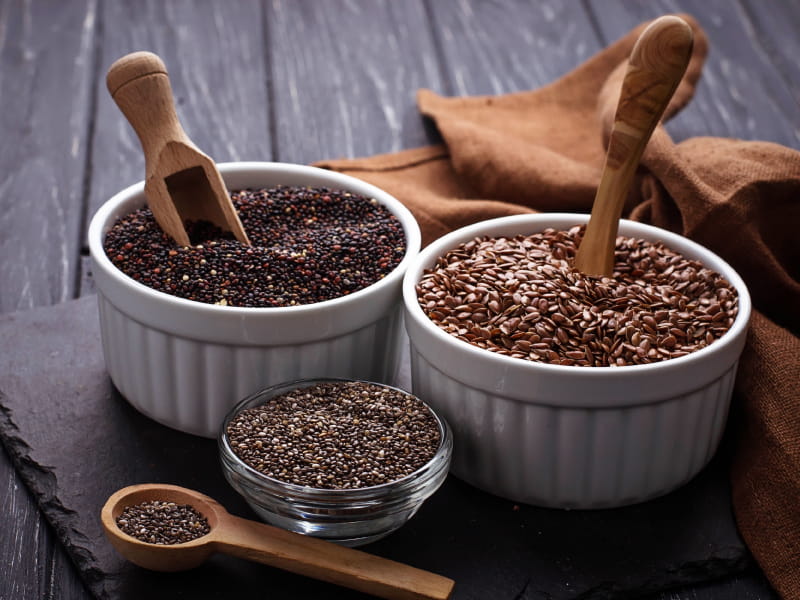
Flax.
Soy.
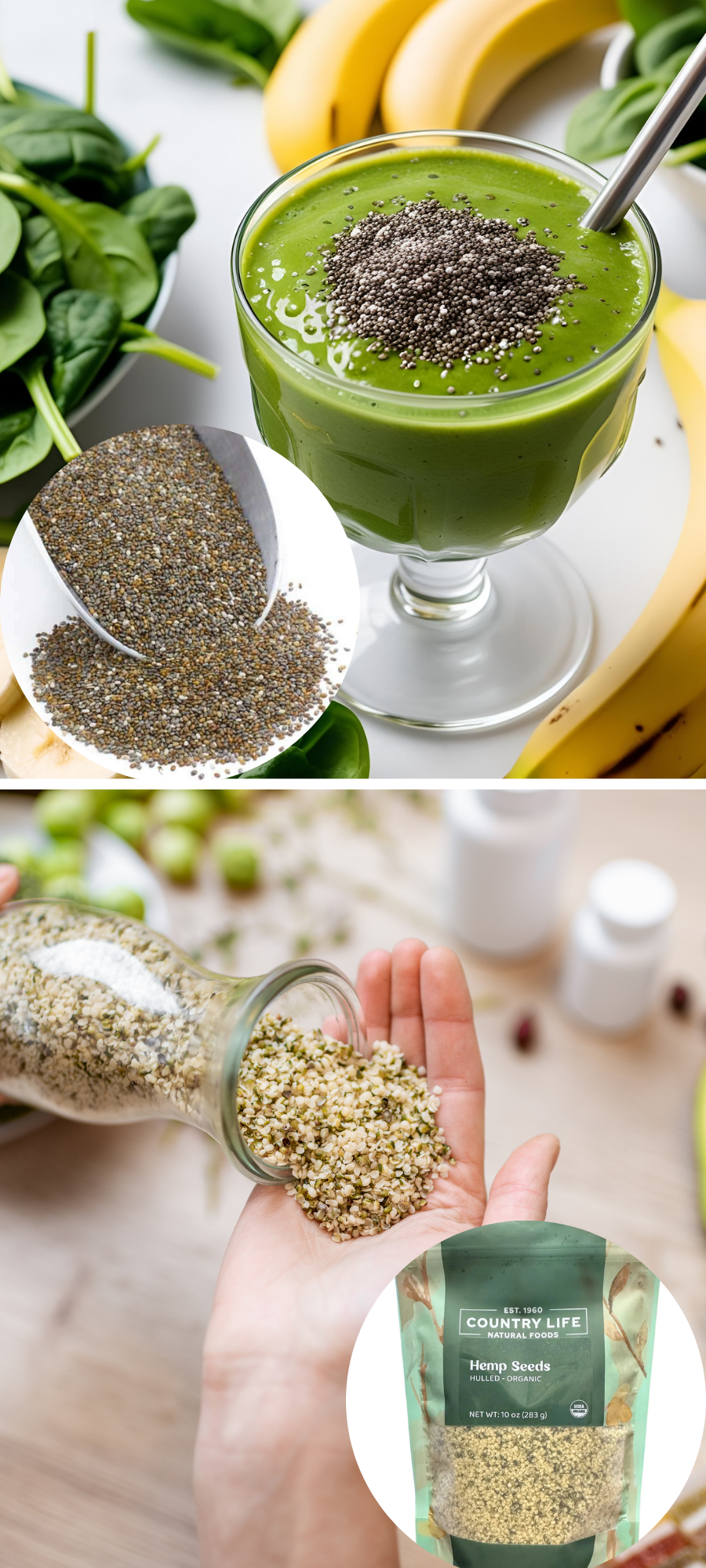
Chia.
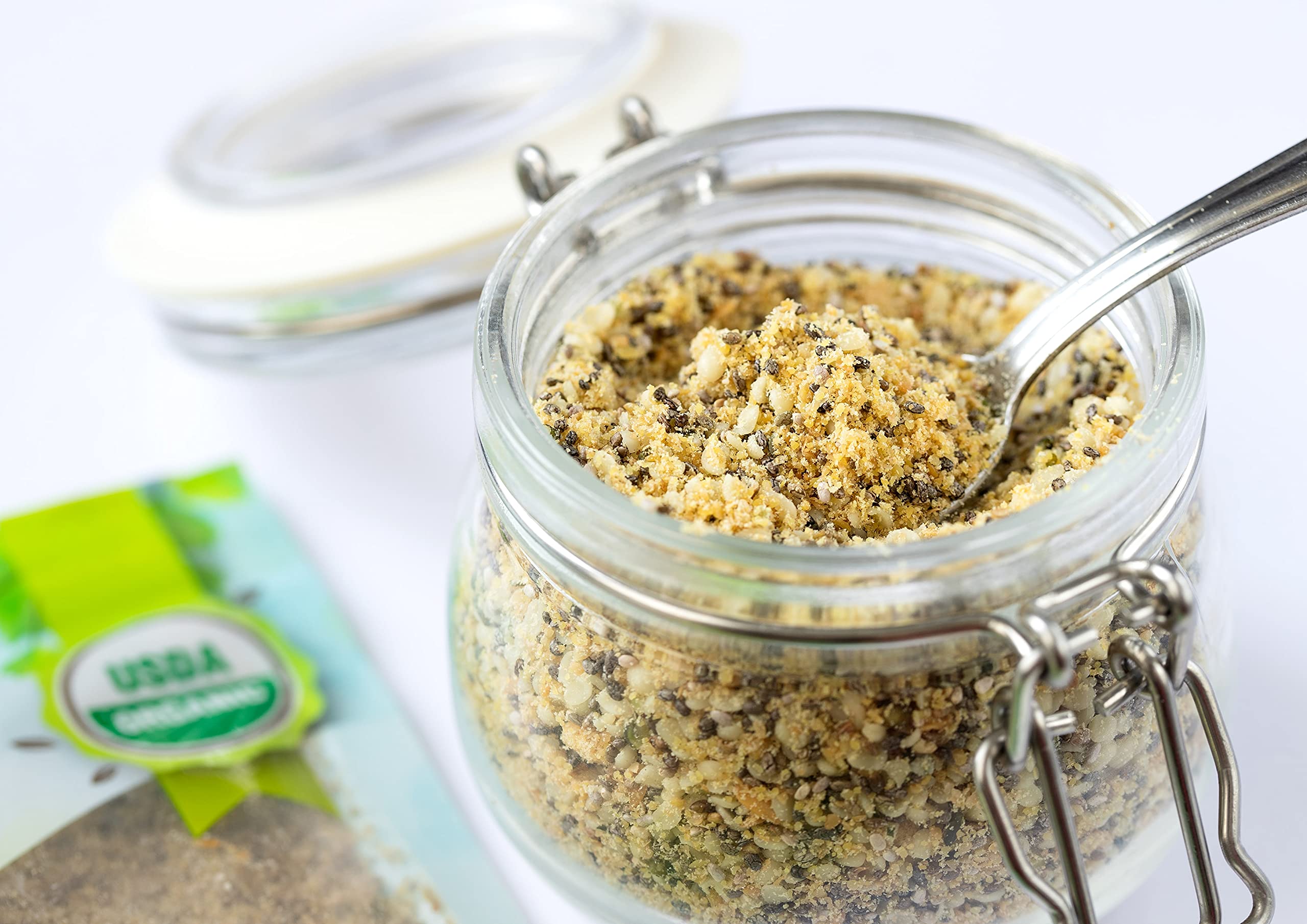
Hemp.
Stacked.
Its the smoothie skin connection.
What Are Phytoestrogens?
Phytoestrogens are natural plant compounds that can interact with estrogen receptors in the body. Because their structure is similar to human estrogen, they can influence how estrogen signals work.
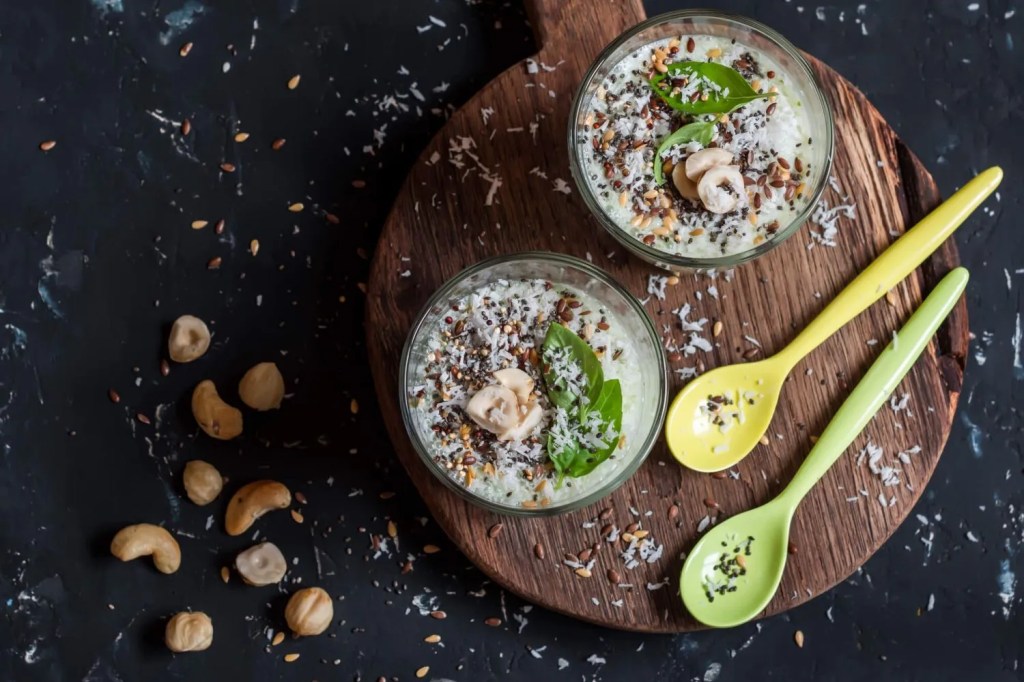
These Seeds Were Never Meant to be Just “Food”
These plants weren’t tossed into yogurt because they were cute or trendy.
They were used intentionally.
For digestion.
For inflammation.
For hormone-related complaints.
That’s medicine.
Medicine is powerful. That’s why it works.
But when you take something that was once used strategically, and start consuming it daily, casually, and indefinitely, what happens?
Don’t be surprised if it starts acting like what it is.
Active. Yes its active.
When did medicine become breakfast?
Flax
Flax is one of the most concentrated sources of phytoestrogens on the planet.
That means they can influence estrogen signaling — subtly, but meaningfully.
Two tablespoons every single morning is not neutral.
If your skin is breaking out along the jawline, if your breasts feel tender, if your cycle feels heavier or more intense than it used to…
It’s likely not random.
Soy
Soy contains isoflavones — well-studied phytoestrogens.
And soy isn’t just tofu anymore.
- Soy milk in your smoothie
- Soy protein in your bar
- Soy isolate in your “healthy” snacks
That’s not occasional exposure. That’s daily hormonal input.
Your skin is a hormone organ. It responds to shifts.
Hemp
Hemp gets marketed as clean protein and beautiful fats.
And yes, it has nutrients.
But it also contains compounds that influence inflammatory and hormone pathways.
Stack hemp on top of flax on top of soy and that’s not passive nourishment anymore.
Its a stack.
Chia
Chia doesn’t get the same estrogen headlines.
But it’s still a concentrated seed used daily in large amounts.
Massive fiber load.
Gel-forming.
Gut-altering.
And your gut and your skin are inseparable.
If digestion is irritated, slowed, overloaded, inflamed — your face often shows it first.
Chia isn’t “bad.”
But daily, high-dose, stacked seed consumption isn’t neutral.
What You Should Know
Phytoestrogens are real.
They are biologically active.
They interact with hormone pathways whether you mean to intervene or not.
Your body is already cycling.
Already adjusting.
Already doing what it was designed to do.
It does not need daily “balancing” from a blender.
Why This Shows Up In Your Skin First
Skin responds to:
- Hormone shifts
- Inflammation
- Insulin changes
- Gut disruption
So when I see:
- Stubborn lower-face acne
- Cyclical flare-ups
- Redness that won’t settle
- Oil that feels out of control
And the routine includes a daily hormone smoothie?
It’s not a surprise.
Your skin is often the first organ to say: This is too much.
Self Check
If your skin is inflamed, cyclical, reactive…
If your jawline won’t clear.
If your cycle feels heavier, moodier, louder.
And you’re drinking a daily hormone smoothie?
Maybe it’s not random.
Maybe it’s not your cleanser.
Maybe it’s not your serum.
Maye it’s not stress.
Maybe you’re nudging a system that didn’t need nudging.
You don’t need a “hormone smoothie.”
You need rhythm.
You need stability.
You need food that nourishes — not food that intervenes.
Your skin is often the first place that tells your body:
“This is too much”.
None of these foods are bad.
It just means they’re not ‘nothing’.
These plants have always been valued because they do something in the body. That hasn’t changed just because we’ve turned them into smoothie ingredients.
And sometimes the skin is the first place where that reminder shows up.
If You Want to Look Deeper
- Phytoestrogens bind to estrogen receptors (Kuiper et al., Endocrinology, 1998).
- Flax is one of the most concentrated dietary sources of lignans (Thompson et al., 1991).
- Flax intake has altered menstrual-cycle parameters in some women (Phipps et al., J Clin Endocrinol Metab, 1993).
- Soy isoflavones exert measurable biological effects in premenopausal women (Cassidy et al., Am J Clin Nutr, 1994).
**This article is for educational purposes only and reflects my observations working with skin. It is not medical advice. If you have concerns about your health or hormones, please speak with a qualified healthcare professional.
 Spa By Camille
Leave a comment