


Growing Lillooet’s Business and Industrial Tax Base
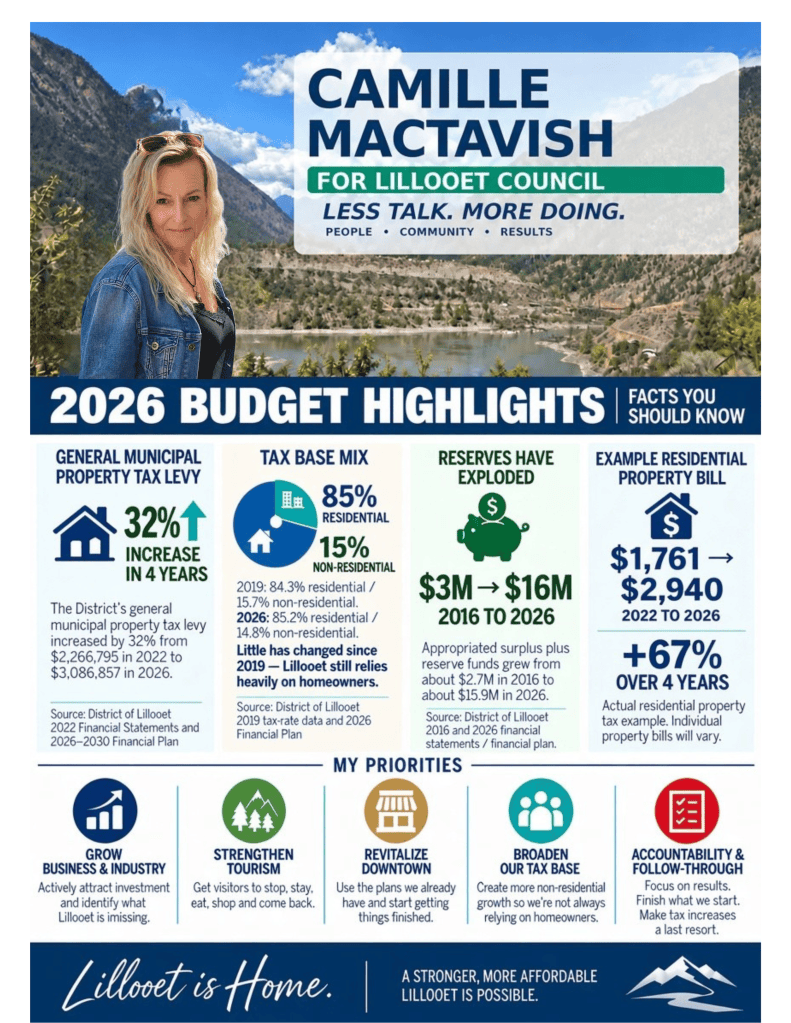
Approximately 85% of Lillooet’s taxable assessment base is residential.
In 2019, approximately 84.3% of Lillooet’s taxable property assessment was residential. In 2026, it is approximately 85.2%.
After seven years, we have not meaningfully diversified our tax base.
If we want to reduce Lillooet’s reliance on residential taxpayers over time, we need to grow the commercial and industrial side of the assessment base.
More business. More private investment. More tourism spending. More jobs. A broader tax base.
1. STOP STUDYING DOWNTOWN REVITALIZATION — START BUILDING IT
Lillooet has had Main Street Design Guidelines since 2001.
More than twenty years later, the District received at least $125,000 in provincial funding for a Downtown Vitalization and Infrastructure Plan.
Yet in 2026, completing that plan remains a municipal objective.
Finish the plan and move directly to implementation. Do not commission another downtown revitalization study before we start physically implementing the work already identified.
Northern Development Initiative Trust’s Main Street Revitalization – Capital program offers eligible communities up to $200,000, covering up to 70% of eligible project costs, for physical downtown improvements.
The most recent 2026 NDIT intake deadline was July 31, 2026. I have found no public evidence that Lillooet submitted an application for that intake.
ACTION
Prepare a shovel-ready downtown project package now so Lillooet is ready for the next NDIT intake.
DELIVERABLE
Secure outside funding and complete a visible first phase of downtown improvements.
No third study before we start building.
2. GROW TOURISM AS AN ECONOMIC DRIVER
Tourism is one of Lillooet’s clearest economic opportunities.
The goal should not simply be to bring traffic through town. We need visitors to:
stop here, stay here, eat here, shop here and come back.
Create a professional Visit Lillooet Visitor Guide in print and digital form.
Tourism Lillooet’s 2019 Strategic Plan called for continuing to produce an annual printed and digital Lillooet Visitor Guide. The guide was previously produced with the Lillooet News, which is no longer operating. I have been unable to find a current dedicated guide being actively distributed outside the community.
The guide should promote Lillooet’s scenery, Seton Lake, history, Indigenous culture, wineries, hiking, fishing, camping, motorcycle touring, scenic drives, accommodation, restaurants, shops, festivals and outdoor recreation.
Then distribute it where travellers actually are:
- BC Visitor Centres
- neighbouring communities
- Lower Mainland and Interior tourism locations
- appropriate ferry and travel-information points
- hotels and campgrounds
- RV and road-trip networks
- tour operators and attractions
- Establish dedicated and consistent District funding for Museum and Tourism services at a level that reflects their value and operational needs.
- Establish the Miyazaki House as an office tenant situation and as the operator, offering office space, events space and community space.
We should also promote clear one-, two- and three-day itineraries designed to turn day-trippers into overnight visitors.
DELIVERABLE
A current Visitor Guide with a documented outside-Lillooet distribution plan focused on increasing overnight stays and local spending.
Tourism should not just bring traffic through Lillooet. It should bring money into Lillooet.
3. CREATE AN “INVEST IN LILLOOET” BUSINESS PACKAGE
An Invest in Lillooet package should sell Lillooet to businesses, developers, industry and investors.
Create a professional print and digital package showing:
- available commercial and industrial property
- transportation and highway access
- utilities and servicing
- workforce and regional market information
- forestry and value-added opportunities
- agriculture and food-processing opportunities
- tourism opportunities
- development and business contacts
- available grants and funding programs
It should also include a simple, regularly updated Business Needs List identifying what Lillooet is currently missing or undersupplied in, so potential investors can quickly see where real opportunities exist.
Then actively put it in front of commercial realtors, developers, industry associations and businesses considering relocation or expansion.
DELIVERABLE
A professional investment brochure, downloadable package and dedicated Invest in Lillooet webpage.
If we want investment, we need to actively sell Lillooet.
4. CREATE A ONE-STOP BUSINESS AND DEVELOPMENT SERVICE
Opening or expanding a business should not require someone to figure out the municipal system alone.
Establish one clearly identified municipal contact responsible for helping serious business and development inquiries navigate:
- zoning
- available property
- permits
- servicing
- business licensing
- provincial requirements
- grants and funding
Publish a simple Opening a Business in Lillooet checklist showing the process, costs and contacts.
Set a clear service standard:
Every serious business or investment inquiry receives an initial response within two business days.
DELIVERABLE
One contact. One process. Clear response timelines.
5. ACTIVELY RECRUIT BUSINESS AND INDUSTRY
Economic development cannot consist of waiting for businesses to come to us.
Lillooet should identify industries that fit our location, resources and workforce and actively recruit them.
Targets could include:
- value-added forestry
- wood products
- food and agricultural processing
- develop and brand as a vibrant events and music destination
- light manufacturing
- transportation and logistics
- equipment repair
- construction and trades
- tourism and outdoor recreation
- accommodation
- professional services
Identify development-ready commercial and industrial properties and actively market them.
Council should receive a simple quarterly report showing:
Businesses contacted
Investment leads
Site visits
Businesses opened or expanded
Jobs created
New commercial or industrial assessment
DELIVERABLE
An active business-attraction program measured by actual results.
Economic development should be measured in businesses, jobs and investment — not meetings and reports.
HOW WE MEASURE SUCCESS
Council should publicly report each year:
Active businesses
Businesses opened and closed
Vacant downtown storefronts
Commercial and industrial building permits
Private investment generated
Jobs created
New commercial and industrial assessment
Residential share of the tax base
Visitor Guides distributed outside Lillooet
GROW THE TAX BASE — DON’T JUST INCREASE THE TAX RATE
Lillooet’s assessment base was approximately 84.3% residential in 2019.
It is approximately 85.2% residential in 2026.
That is not meaningful economic diversification.
More visitors. More businesses. More industry. More private investment. More jobs. A revitalized downtown. A broader tax base. Less pressure on residential property owners.
 Spa By Camille
Leave a comment