

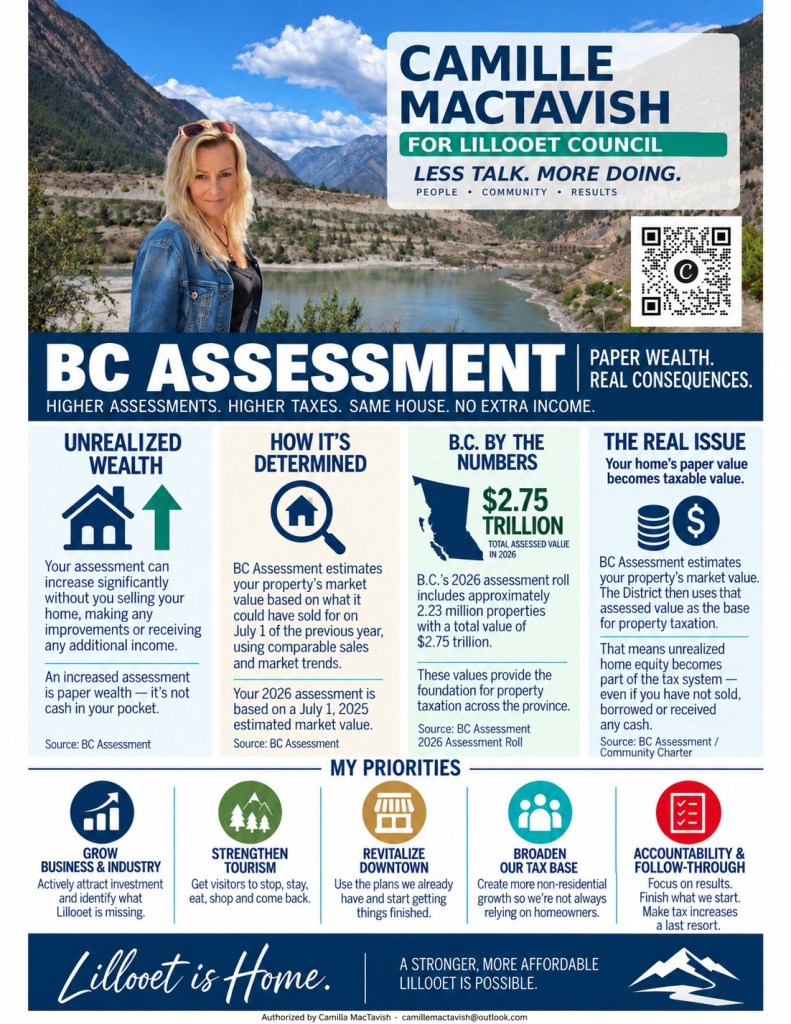
Every year, BC Assessment puts a dollar value on your home based largely on what it estimates the property could have sold for on July 1 of the previous year. That number can go up dramatically without you selling your home, earning another dollar, or having any additional cash available to pay your bills.
That is the part of property taxation that deserves more attention.
An increase in the value of your home is unrealized property wealth. It exists on paper. If your house increases from $300,000 to $500,000, you have not received $200,000. You don’t have another $200,000 in your bank account. To actually access that wealth, you generally have to sell the property or borrow against it.
Yet that estimated market value forms the basis of B.C.’s property assessment system and is used by governments to distribute the property-tax burden.
BC Assessment is very clear about this. It says assessments provide a stable base for property taxation and form the foundation for billions of dollars in property-tax revenue every year.
There is an important distinction here.
If everyone’s property assessment rises by approximately the same percentage, your municipal property taxes do not automatically rise by that same percentage. Local governments determine how much property-tax revenue they intend to collect and establish tax rates. Your assessment helps determine your share of that tax burden compared with other properties.
That means the real issue isn’t simply that BC Assessment values homes.
The issue is that governments are taxing property owners using an estimated market value that may bear little relationship to the homeowner’s actual income or ability to pay.
A retired homeowner can live in exactly the same house, earn exactly the same pension, and make no improvement whatsoever to the property — while the estimated market value of the land around them climbs substantially.
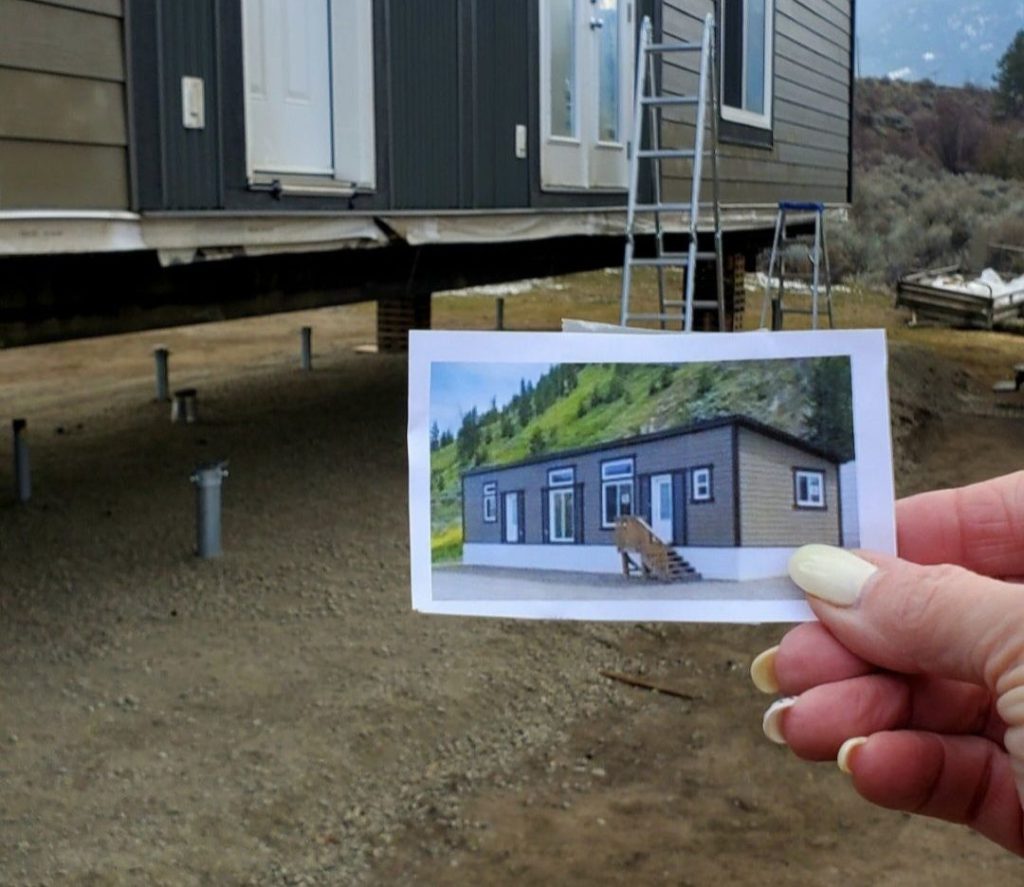
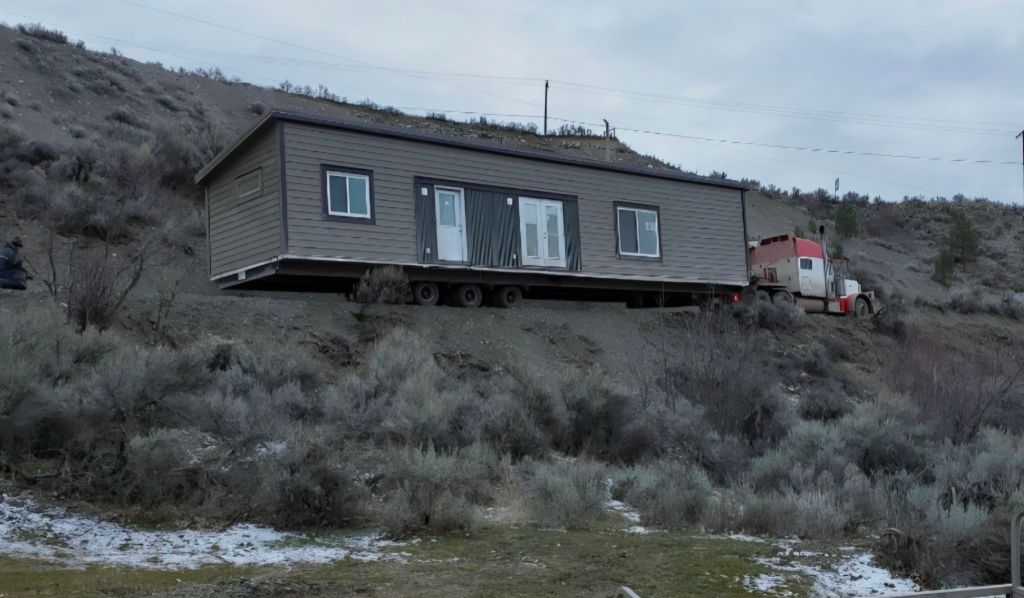
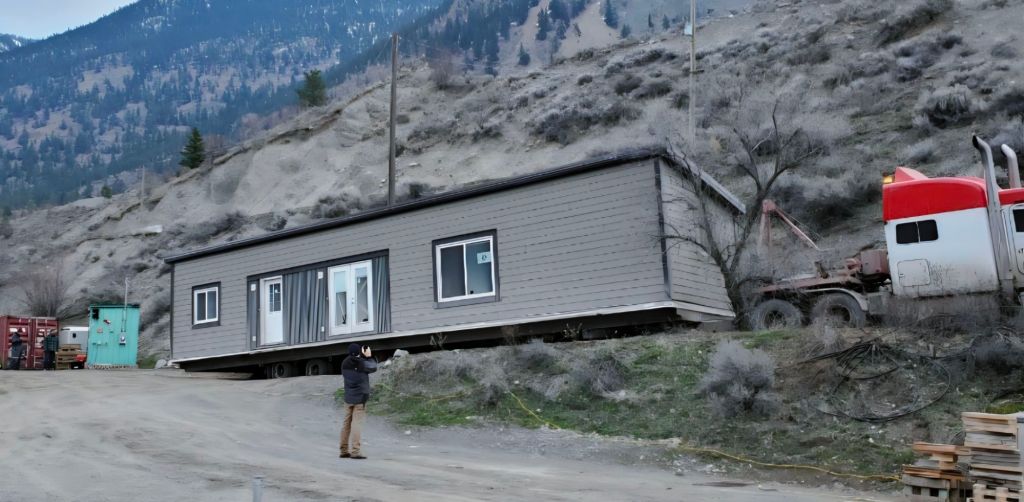
Our own residential property taxes went from $2,250 in 2025 to $2,940 in 2026 — an increase of just over 30% in a single year. When I questioned the assessment, I was told that my style of home had become more desirable because it was considered affordable. There is a bitter irony in that: the very affordability that made the property attractive helped drive up its assessed value, while the resulting tax bill made it less affordable for the person already living in it.
That is why the long-term direction of property taxation matters. A home does not suddenly start producing income because its market value rises. If property-tax bills continue climbing sharply over time, the monthly equivalent can become a substantial housing expense in its own right — on top of whatever mortgage, insurance, utilities and maintenance costs the homeowner already carries.
Their financial circumstances haven’t necessarily improved.
Their house is simply worth more on paper.
That distinction matters, particularly in communities where property values can rise because of forces completely outside an individual homeowner’s control.
Market demand changes. Nearby properties sell at higher prices. Land becomes scarce. Buyers from outside the community enter the market. None of those things necessarily put additional income into the homeowner’s pocket.
And yet the assessed market value becomes part of the calculation used to determine the homeowner’s property-tax obligation.
There is also nothing particularly current about the number you receive in January. BC Assessment’s 2026 assessment, for example, is based on an estimate of what the property would have sold for on July 1, 2025. BC Assessment itself advises homeowners seeking a property’s present-day value to consult a realtor or private appraiser because the assessment represents that earlier valuation date.
Property assessment has a legitimate administrative purpose: governments need some method of distributing property taxes among properties, and market-value assessment is the system British Columbia has chosen.
But homeowners should understand exactly what that number represents.
It is an estimate of market value.
It is not income.
It is not cash.
It is not necessarily money the homeowner has ever received.
And until that value is actually converted into money, much of the increase is exactly what it sounds like:
paper wealth.



Leave a comment